

QuantMilwaukee, WI ~ Jun 2026 – Aug 2026
Quantitative Investments Analyst Intern @ Northwestern Mutual Investment Management Co.
Systematic credit research, pre-trade analytics, and fixed-income portfolio analytics.
Systematic Credit Strategies — Multi-Signal Factor Research & Implementation Platform
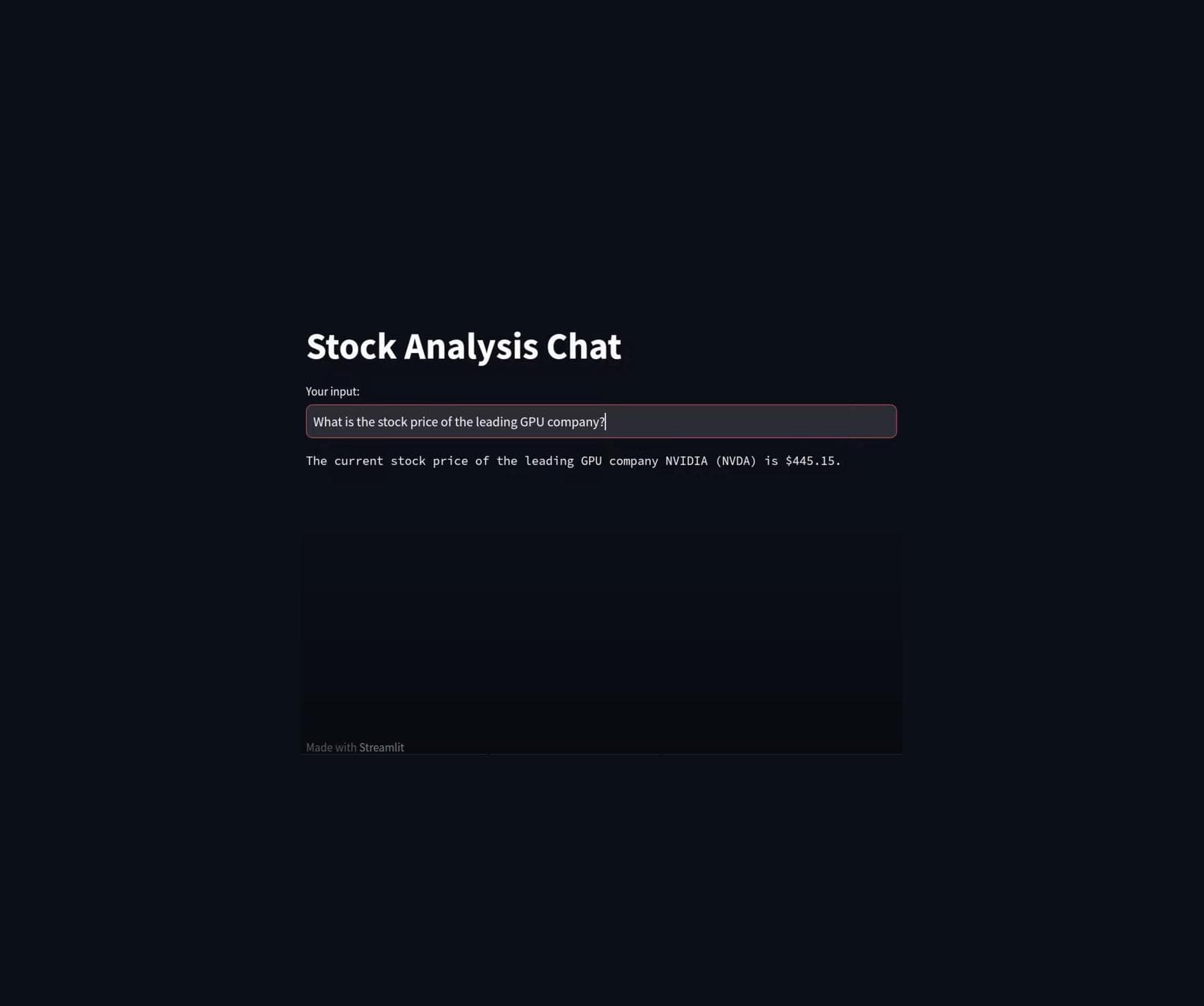
- Built an end-to-end systematic credit research and backtesting platform in Python, Snowflake SQL, and Streamlit for the U.S. investment-grade corporate universe, transforming formation-date bond characteristics into holdings-level backtests with decile portfolio formation, forward CUSIP-level return linking, transaction-cost treatment, and official benchmark reconciliation — built to distinguish genuine relative-value alpha from compensated exposure to credit beta, duration, spread-duration (DTS), liquidity, carry, and downgrade risk.
- Constructed a peer-relative spread signal measuring each bond's OAS against the median OAS of its formation-month peer group (rating bucket × sector × narrow maturity bucket, subject to minimum-observation thresholds, ranked D1–D10 within peer group), plus a fundamental-residualized variant standardizing point-in-time issuer fundamentals cross-sectionally by formation month and issuer type — debt/assets, net debt/EBITDA, interest coverage, with long-term debt to long-term assets substituted for financial issuers — ranking the portion of excess spread unexplained by fundamentals.
- Engineered cross-asset momentum signals mapping parent-issuer equity returns onto associated bonds to exploit the information-transmission lag between equity and credit markets, implementing a single-horizon 3-month signal and a volatility-scaled composite (R1m + R3m/√3 + R6m/√6)/3; intersected valuation and momentum ranks into quadrant double-sort and high-minus-low portfolios built from common CUSIP-month observations, separating relative-value opportunities from value traps (cheap but deteriorating) and justified richness.
- Developed a formation-only KMeans peer-clustering comparison (scikit-learn) replacing fixed rating/sector/maturity buckets with learned peer cohorts, excluding forward returns from clustering features to prevent look-ahead contamination; engineered portfolio construction with equal-weight and market-value weighting, geometric daily return linking, and custom Frongello linking modifications reconciling cumulative time-series charting with tabulated period-level attribution and aggregation fields.
- Modeled transaction costs and turnover at 4bp matched round-trip with maturity-aware treatment (natural maturities excluded from trading turnover, buy-side cost charged on reinvestment); built a CUSIP-level implementation research engine testing signal survival under real constraints — signal intersections, sleeve blends, minimum bond/issuer breadth rules, CUSIP and economic-issuer weight caps, partial rebalancing, no-trade bands, and turnover budgets — reporting gross vs. net active return, coverage, concentration, and active information ratio.
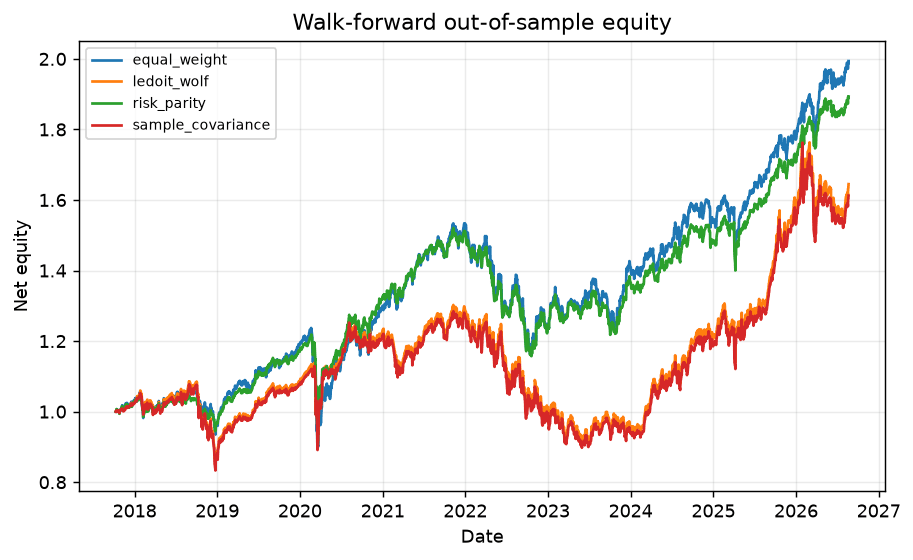
- Diagnosed a return-field semantics error in underlying constituent data (security-level totals expressed as month-to-date percentage rather than daily basis points), correcting an incorrect daily geometric linking assumption that would have silently distorted every reported result; designed the statistical validation framework required for defensible inference — HAC/Newey-West adjusted statistics, block bootstrap confidence intervals, multiple-testing correction, walk-forward out-of-sample validation, exposure-matched neutrality controls, and stress-period attribution.
Traders Edge — Investment Grade Corporate Pre-Trade Analytics Platform
- Built and deployed a Streamlit/Snowflake/dbt pre-trade analytics platform for Investment Grade Corporate traders, unifying intraday dealer quote feeds (Markit, Neptune), BlackRock Aladdin portfolio holdings, third-party liquidity scores, parametric relative-value curves, and Bloomberg-derived valuation metrics into a single front-office decision-support workflow.
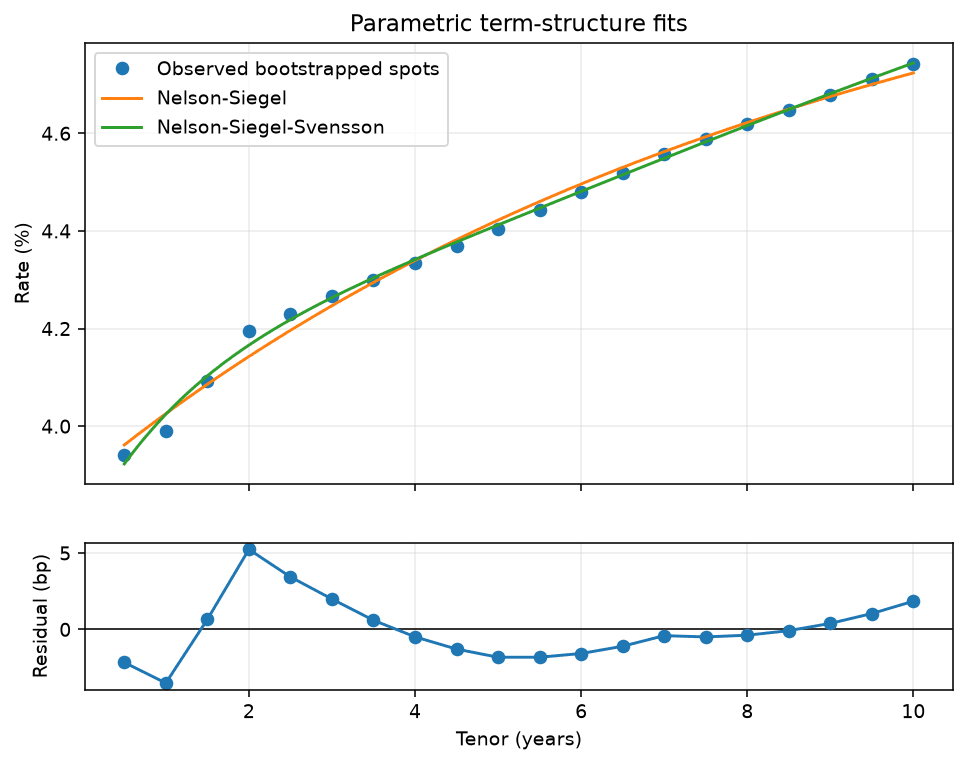
- Built Nelson-Siegel parametric curve analytics fit via SciPy optimization across duration, spread duration, WAL-to-worst, OAS, Z-spread, and yield-to-worst axis combinations, supporting one to ten comparison periods and a change subplot computing per-security spread deltas between selected periods — enabling traders to identify rich/cheap dislocations across the maturity structure and track temporal spread movement relative to fitted fair value.
- Refactored best-quote aggregation into a row-oriented eligible-quote pipeline aggregating tied broker quotes and sizes; engineered parameterized Snowflake/Jinja queries supporting configurable time windows, minimum notional thresholds, broker and sender exclusions, spread and price ranges, duplicate suppression, latest-quote flags, and axed-quote filtering isolating broker-committed liquidity for executable market-depth assessment under varying trade-size assumptions.
- Implemented portfolio- and date-aware holdings enrichment joining benchmark holdings on CUSIP and portfolio ticker with global-record fallback, surfacing rating, 144A status, WAL, amount outstanding, and effective-date-aware market value and par value columns; built cascading universe controls with hardened dependent-filter state management, and a Bloomberg/Excel valuation paste-back workflow for IBVAL bid/ask spread and G-spread enrichment with flexible header detection, error-value tolerance, CUSIP validation counts, and context-aware clearing.
- Developed quote drill-through and microstructure visualization — latest quote by source and broker with highlighting of rows backing authoritative best levels, raw/deduplicated toggle over broker, sender, price, yield, size, and axe metadata, and quote-history charts with broker-level coloring, size-aware point sizing, and LOESS trend lines — plus feed freshness monitoring, configuration-driven architecture, bounded caching, pytest/Playwright UX regression coverage, and Git-based INT/QA/production deployment.
Portfolio Analytics Suite — Multi-Source Fixed Income Analytics
- Extended a fixed income portfolio analytics suite spanning eight interactive applications (Slicer, Portfolio Dashboard, Matrix, Heatmap/Treemap, Scatter, Bar Chart, Aggregate Time Series, CUSIP Viewer) supporting IG and HY corporate portfolios and CLO portfolio sleeves across a shared semantic layer, enabling slicing and drill-through along rating, sector, maturity bucket, price bucket, issuer, and arbitrary custom dimensions.
- Architected a YAML-driven semantic source registry defining per-source tables, aliases, grains, identifiers, dates, weighting fields, metric definitions, and benchmark capabilities — allowing structurally heterogeneous holdings datasets to coexist across all eight applications without forcing a sparse union schema, with source-specific filtering, aggregation behavior, and session isolation on source switching.
- Engineered runtime selected-universe calculations in Snowflake/Jinja for percentages of total, weighted contributions, and ratios via row-level numerators evaluated against dynamically resolved denominators, so every metric recomputed correctly under arbitrary filters, drilldowns, and multi-portfolio selection; implemented dynamic calculated fields for OAS contribution, contribution-to-duration, model contribution-to-duration, and spread-duration contribution, enabling risk decomposition across any user-defined grouping.
- Designed credit-quality analytics for leveraged loan and CLO sleeves using row-level conditional par numerators driving par-weighted ratios — % CCC & Below (Moody's Caa/Ca/C), % B- (S&P asset-level), % Sub-95/90/80 by dollar price, % Defaulted Par, % Covenant-Lite, and weighted average price and cost — feeding indenture coverage test monitoring, where threshold breaches trigger mandatory cash flow diversion impacting equity tranche returns.
- Built a trustee-report ingestion workflow parsing ZIP, CSV, and PSV filings and surfacing weighted average rating factor (WARF), diversity score, compliance test results, capital structure, collateral detail, and transaction data; added trade activity analytics decomposing volume by trade type and reason (credit risk, credit improved, discretionary, restructuring), plus source-aware chart adapters with saved views, URL-persisted state, and PDF export.